The Best At Home Preschool Curriculum for 2-4 Year Olds
Planning preschool at home can feel overwhelming, especially when you’re teaching a toddler with a short attention span. This guide shares the best at home preschool curriculum options for ages 2–4, from playful learning tools to complete programs.
This guide shares the best at-home preschool curriculum options for ages 2–4, from full programs to hands-on activities and play-based learning ideas. You’ll find honest reviews, practical tips, and plenty of options to help your child learn and have fun.

All About Reading Pre-Reading
The pre-reading All About Reading curriculum works well as a standalone at-home preschool curriculum. It includes several hands-on components, including Ziggy the Zebra, a puppet that quickly became a favorite in our home. I initially thought the puppet might be an afterthought, but it ended up being one of the biggest highlights for this age group.
Why We Love It
We truly enjoyed using this curriculum, especially its focus on helping children learn capital and lowercase letter names and sounds in a playful, engaging way.

However, this curriculum goes far beyond teaching letter names alone. The yellow activity cards, shown above, support a range of early literacy skills, including rhyming and sound awareness. Each letter also gets silly poems, like this llama poem for the letter L. Overall, the program is very thorough and, in my opinion, comparable to an above-average preschool or Pre-K 4 classroom, depending on the child’s age and readiness.

The Pre-Reading course also includes creative ideas for decorating letters using hands-on materials. Activities like salt for the hippo bath and cotton ball “snow” for the inchworms made learning feel playful and memorable. We had so much fun decorating the letters together using the different prompts, and it kept lessons engaging without feeling repetitive.

Above, you’ll see a glimpse of the teacher’s manual on the left and the student workbook on the right. The program includes a complete reading script for parents to follow, making it easy to guide each lesson. The Ziggy icon signals when it’s time to bring out the zebra puppet for a hands-on activity, which adds a lot of joy for young learners.
If you’re considering purchasing this at-home preschool curriculum secondhand or skipping the Ziggy puppet, I recommend using another puppet or small toy to keep lessons engaging. We used this curriculum successfully at ages 3 and 4, and then transitioned into All About Reading Level 1 for kindergarten.
Gentle & Classical Press Preschool Curriculum

The Gentle & Classical Press’s preschool curriculum is my personal favorite. If you’re a stay-at-home mom planning a Charlotte Mason–inspired homeschool, this curriculum is an excellent fit. It includes many thoughtful components, though you will need to purchase some additional items, such as books and basic craft supplies.
This program also incorporates Kate Snow’s Preschool Math at Home, which I’ll share more about further down in this post.

Why We Love It
This is a full and complete preschool curriculum that can be used for ages 2–4, though I personally think it works best for 3-year-olds. The program includes many different components designed to build a well-rounded routine.
For example, it features a weekly handicraft, which adds a gentle rhythm and hands-on creativity to the week. I really like how diverse the handicrafts are. You will be making a guitar out of rubber bands and a shoe box, sewing a felt bear plushie, and even baking a dessert together.
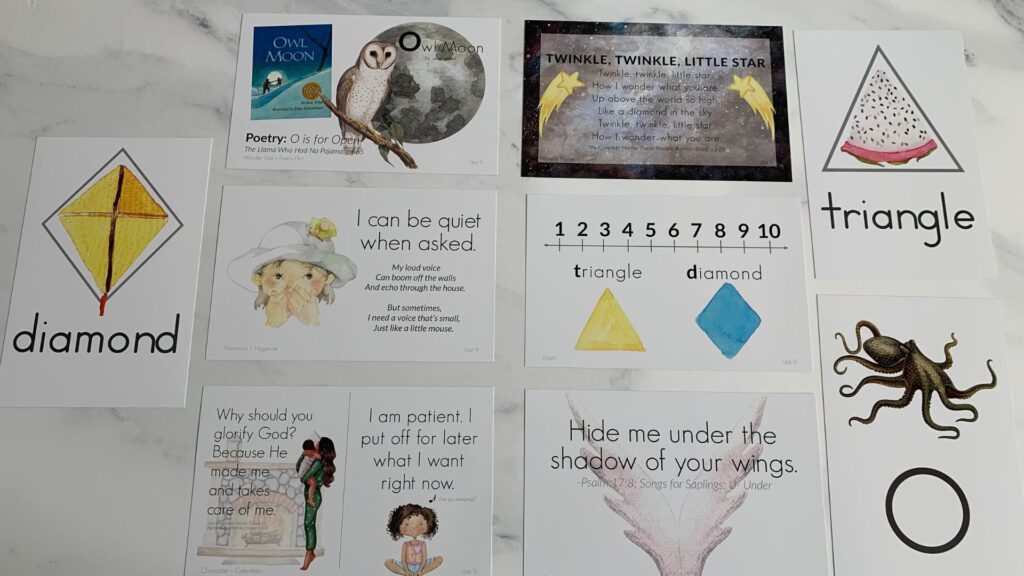
Each week includes coordinating cards that help bring all of the moving parts together. These guide conversations around the letter of the week, book of the week, nursery rhymes, and even a Bible verse set to music through Song for Saplings YouTube videos.
Some families choose to display the cards on a board, but I’ve found that simple tape on the wall in our homeschool room works just as well. I’ve also enjoyed keeping the cards in a small stack and talking through them three times a week before reading the poems and the book of the week.

Gentle & Classical Preschool includes an excellent art study component, introducing preschoolers to classic art at a young age. Each week rotates between art and music study, with the music portion for the year focused on Peter and the Wolf. The curriculum also includes puppetry activities to act out and explore the story, and we enjoyed watching different variations on YouTube to enrich the experience.
Timberdoodle Recommendation: Gakken Sticker Book

Gakken sticker books are a fun, age-appropriate learning activity that will likely become a preschooler’s favorite! They combine educational content with hands-on play, offering simpler books for younger children and slightly more challenging options that are perfect for 4-year-olds.
The Good and the Beautiful Preschool Workbook

We thoroughly enjoyed The Good and the Beautiful Preschool workbook. This brand is well known in the homeschool community, especially for the youngest learners, and is praised for being open-and-go. It works well for almost anyone, but families with multiple children or parents who work full-time may especially appreciate how easy it is to use.
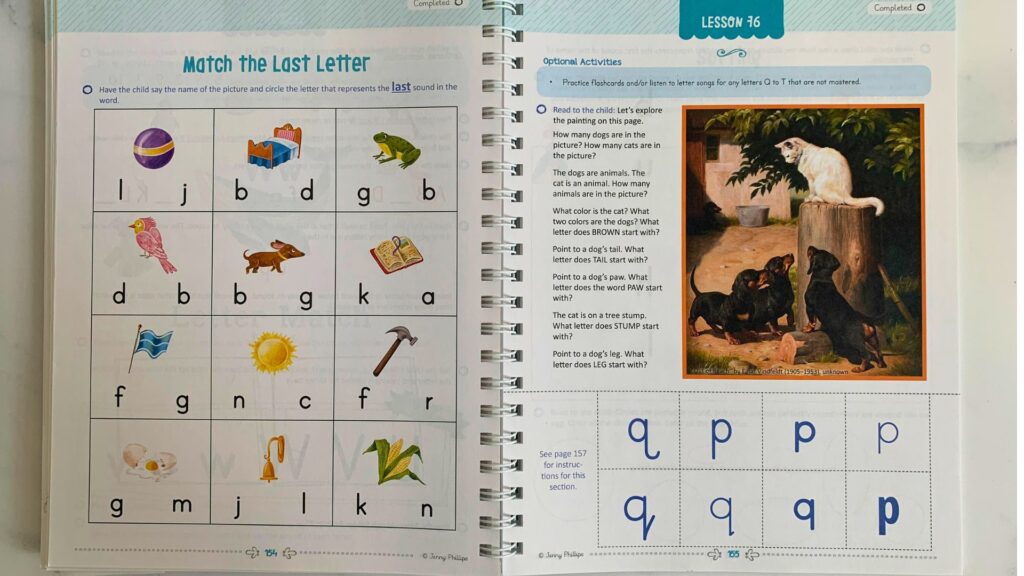
The illustrations in this curriculum are simply beautiful, with vibrant colors and classic art that make it truly stand out. My child enjoyed completing the preschool work, and because the materials are both good and beautiful, we felt inspired to finish each activity — which is exactly what happened in our experience.
Timberdoodle Recommendation: Learning Resources Science Lab Set for Preschool

Timberdoodle is one of my favorite discoveries. Each year, they curate updated lists of complete homeschool curriculum for every grade, from babies through 12th grade. What I love most is that they offer so many fun educational extras. Their selections include core programs like All About Reading, but they also highlight unique resources, such as this preschool Lab Set, that make learning exciting and hands-on.

The set includes about 10 activity cards that help you explore science with your preschooler, often using simple experiments in the kitchen. The activities are easy to follow, so they don’t feel overwhelming, yet they are engaging and meaningful enough for your child to enjoy and learn from.
Timberdoodle Recommendation: World Map Puzzle

If you want to incorporate the Montessori teaching style, geography is an important component. This world map puzzle is ideal for preschoolers, offering an age-appropriate challenge that works well as a Montessori activity. When completed with a parent, it provides a great opportunity to review continent and ocean names in a hands-on, engaging way.
Timberdoodle Recommendation: Day & Night Game

Day & Night is a fun logic game that comes with about 50 sequential cards, each adding a bit more challenge. The child recreates the image while a parent checks their work. About halfway through, the cards switch to outlines instead of full-color pictures for “night,” making the game more challenging and engaging. This is one of the educational extras from Timberdoodle that I highly recommend, and it’s perfect for incorporating play-based learning into an at-home preschool curriculum for this age group.
Timberdoodle Recommendation: Building Thinking Skills Workbook

Timberdoodle does an excellent job curating logic-based curriculum, and this Building Thinking Skills book was well worth it. The book starts out fairly easy and gradually increases in difficulty, with some questions that are real mind-benders — I can see how they could eventually help with state tests or even SAT/ACT reasoning skills. While the book is labeled for ages 3–4, I recommend it for 4-year-olds for the average child.
Timberdoodle Recommendation: Mathematical Reasoning Beginning I

Timberdoodle also recommends Mathematical Reasoning Beginning I, and we really enjoyed working through 2–3 pages at a time. After completing Kate Snow’s Preschool Math at Home, this book offered additional math practice well before kindergarten, reinforcing skills in a fun and manageable way.
Gakken Play Smart Alphabet Workbook
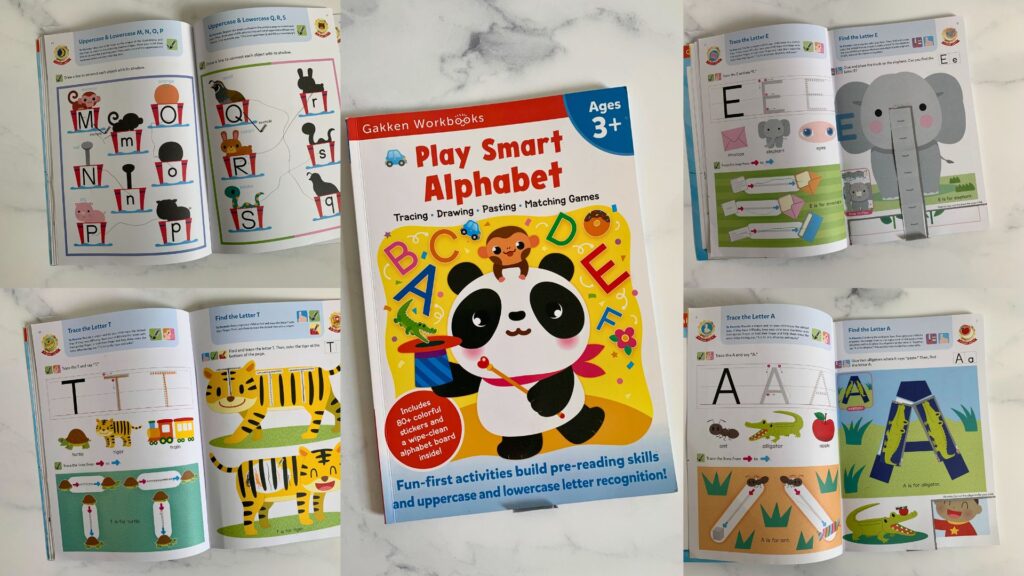
Both of my kids thoroughly enjoyed working through the Gakken Alphabet book. The activities are fun, interactive, and engaging, and we typically completed a few pages per sitting, which made learning manageable and enjoyable.
Magnetic Alphabet Handwriting Toy

Magnatab was recommended by Timberdoodle a few years ago and has been a fun tool for us. It’s especially handy as a car ride activity, since the pencil magnetically lifts dots as kids trace letters. Our set includes lowercase letters on the reverse side, which we use before starting any Handwriting Without Tears course. Once children have mastered Magnatab, it’s usually a good time to move on to Pre-K 4 Handwriting Without Tears.
Book: What Your Preschooler Needs to Know

What Your Preschooler Needs to Know is an oldie but a goodie. We read one or a few sections at a time (many are quite short!) throughout the school year, often as part of bedtime stories. While the book isn’t brand new, it’s a wonderful catch-all introduction to a range of topics — from classic stories like Goldilocks & The Three Bears, to science concepts like life cycles, and history lessons on the first Thanksgiving and George Washington.
Sonlight Preschool Curriculum
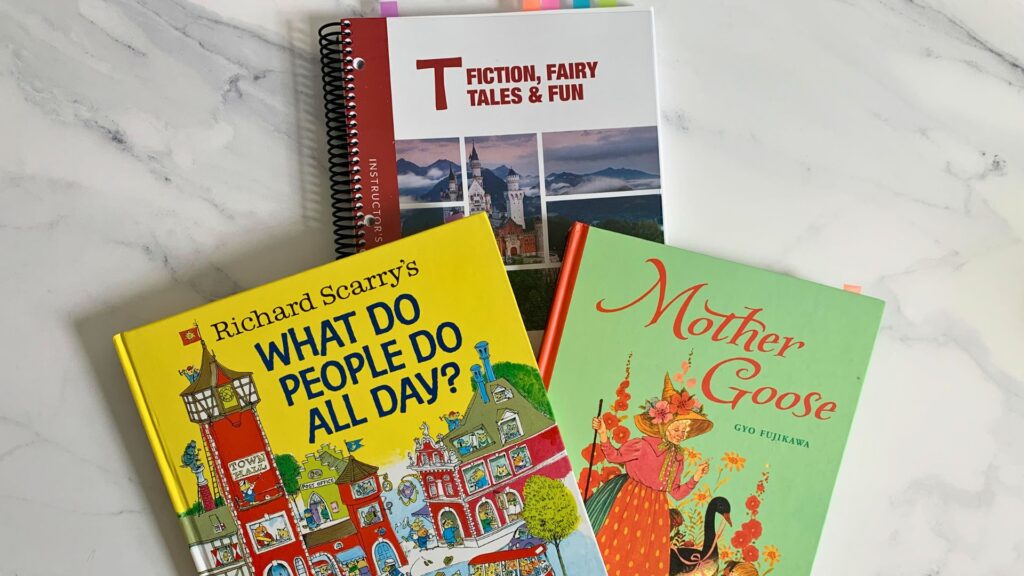
Sonlight is a well-known name in homeschooling, and we absolutely love it! They are especially recognized for their reading lists, and many children who follow Sonlight’s programs develop strong reading comprehension skills early on. Most of their lists are actually a bit ahead of the suggested year, and they use letters instead of grade levels to organize their curriculum. We found the Sonlight preschool program to be engaging, well-structured, and a wonderful introduction to early learning.

Here’s a peek inside the Sonlight teacher manual. You can see that it’s a complete, well-rounded curriculum, similar to The Good and the Beautiful and Gentle + Classical Press Preschool. That said, we only used Sonlight for its reading list, and didn’t incorporate the handwriting, music, or other components. The preschool program does include a gentle Montessori influence, with practical life activities like learning to cut on a cutting board or wash cups. Overall, we love Sonlight and fully endorse it — we just primarily use it for early reading.
Mother Goose Poetry Book

Mother Goose is one of the poetry books recommended by Sonlight. The illustrations are adorable, and the classic poems make it a timeless addition to any preschool reading routine.
Preschool Math at Home

We absolutely love Kate Snow’s Preschool Math at Home, which was first introduced to us through Gentle + Classical Press. Kate Snow, who has a Harvard degree in math and has homeschooled her own children, designed this book to be play-based, so students learn math through fun activities like counting race cars or setting the table for a plushie tea party. I can’t wait to start using this book with my second child. I recommend beginning around 3.5 years old, with just one activity per day to keep it enjoyable and manageable.
Lovevery Montessori Age Appropriate Educational Toys

We purchased a few Lovevery boxes and like them enough to endorse, though there are a few caveats. For us, it was challenging to keep all the pieces organized for our second child — admittedly, probably because we didn’t put everything away carefully. When left out with regular toys, some pieces were lost, which means we won’t be able to reuse the kits as intended.
That said, Lovevery offers different boxes of educational Montessori toys tailored to each age, starting with babies and going through eight years old. We didn’t purchase the full set, but selected a few boxes that suited our needs. I recommend Lovevery, but I also caution parents to keep the items organized and collected after play if they want to save them for siblings.
Mother Goose Time Preschool and Toddler Boxes

Mother Goose Time (also known as Experience Early Learning) is a fantastic at-home preschool curriculum. This was the first curriculum we used, and while it’s designed for daycare or preschool settings, it works equally well for homeschooling.

We purchased the toddler version and love the interactive activities. Each box comes with nearly everything you need for art projects, and the creations my kids make are some of my favorites ever! The boxes also include books, math activities, and even music, and both of my children enjoy the three boxes we’ve used so far.
One box is designed to last about a month in a traditional preschool or daycare setting, but for homeschooling, it usually lasts much longer.
Conclusion
So there you have it — a carefully reviewed collection of well-loved at-home preschool curricula. Whether you’re looking for one complete program or prefer to mix and match smaller resources to create a full school year, I hope this guide helps you on your homeschooling journey.
What curriculum are you planning to use for your preschooler? Share your thoughts in the comments below — I’d love to hear!
Pin It For Later